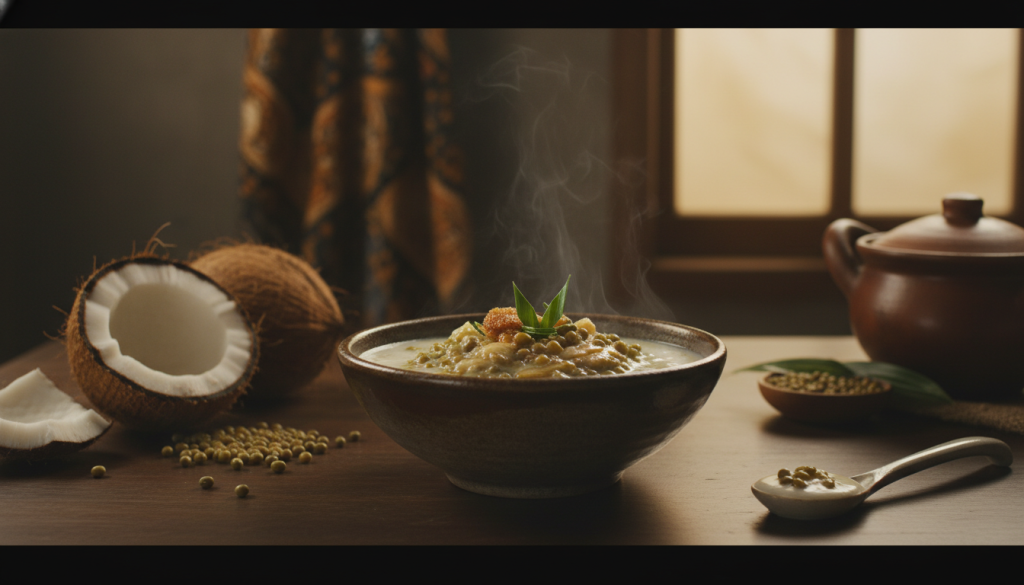
Indonesia, a country renowned for its vibrant culinary landscape, offers a plethora of dishes that tantalize the taste buds. Among its many sweet delights, Bubur Kacang Hijau, or sweet mung bean porridge, stands out as a beloved classic. This comforting dessert is a staple across the archipelago, cherished for its creamy texture, aromatic sweetness, and wholesome goodness.
Often enjoyed as a warm breakfast, a light snack, or a soothing dessert, Bubur Kacang Hijau is more than just a meal; it’s a taste of home and tradition for many Indonesians. Its simple yet profound flavors evoke a sense of nostalgia and comfort, making it a perennial favorite.
The Heart of Indonesian Comfort Food
Bubur Kacang Hijau holds a special place in Indonesian culture. It’s a dish commonly found in street food stalls (warungs), traditional markets, and even modern cafes. Its accessibility and affordability contribute to its widespread popularity, making it a dish enjoyed by people from all walks of life.
While primarily known as Bubur Kacang Hijau, it is sometimes referred to as Kolak Kacang Hijau, especially when served as part of a larger ‘kolak’ assortment during the fasting month of Ramadan. Regardless of the name, the essence remains the same: a sweet, creamy, and satisfying mung bean concoction.
Cultural Significance and Occasions
This sweet porridge is particularly popular during cooler weather or as a soothing treat when one feels under the weather. It’s also a common sight during family gatherings and festive occasions, symbolizing warmth and hospitality. The ease of preparation makes it a go-to dessert for many households.
Key Ingredients: Simplicity Meets Flavor
The beauty of Bubur Kacang Hijau lies in its relatively simple ingredient list, where each component plays a crucial role in creating its distinctive flavor profile.
Mung Beans (Kacang Hijau)
The star of the show, mung beans, are small, green legumes known for their mild, slightly sweet flavor. When cooked, they become tender and slightly mushy, forming the base of the porridge. Mung beans are also highly nutritious, packed with protein, fiber, and essential vitamins and minerals.
Before cooking, mung beans are typically soaked for several hours or overnight. This step significantly reduces cooking time and helps achieve a softer, more desirable texture for the porridge.
Coconut Milk (Santan)
Coconut milk (santan) is indispensable for imparting the rich, creamy texture and subtle sweetness that defines Bubur Kacang Hijau. It provides a luxurious mouthfeel and balances the earthiness of the mung beans. Both thick and thin coconut milk can be used, often added at different stages of cooking to achieve optimal creaminess without curdling.
Palm Sugar (Gula Merah / Gula Aren)
For sweetness, palm sugar (gula merah or gula aren) is traditionally preferred over refined white sugar. Palm sugar offers a deeper, more caramel-like sweetness with earthy undertones that perfectly complement the other ingredients. Its natural brown color also contributes to the porridge’s appealing hue.
Fragrant Aromatics
To elevate the flavor and aroma, specific aromatics are crucial:
- Pandan Leaves (Daun Pandan): These long, green leaves impart a unique, vanilla-like fragrance that is characteristic of many Southeast Asian desserts. They are typically knotted and simmered with the beans.
- Ginger (Jahe): A few slices of fresh ginger add a subtle warmth and a hint of spice, cutting through the richness of the coconut milk and providing a comforting kick.
- Salt: A pinch of salt is essential to balance and enhance all the sweet flavors, preventing the dessert from being overly cloying.
Crafting the Perfect Bubur Kacang Hijau
The preparation of Bubur Kacang Hijau involves a few straightforward steps, resulting in a wonderfully satisfying dish. After soaking, the mung beans are boiled until tender, often in a pressure cooker to speed up the process.
Once the beans are soft, palm sugar, pandan leaves, and ginger are added, allowing the flavors to meld. Finally, coconut milk is stirred in and gently simmered until the porridge thickens to the desired consistency. Care must be taken not to boil the coconut milk too vigorously, which can cause it to separate.
Serving Suggestions and Variations
Bubur Kacang Hijau can be enjoyed warm or chilled, depending on personal preference and the climate. It’s often served in bowls, sometimes with additional toppings to enhance the experience.
Popular Toppings Include:
- Sliced Bread: Often white bread, which soaks up the creamy porridge beautifully.
- Glutinous Rice (Ketan): Cooked sticky rice, offering a delightful textural contrast.
- Condensed Milk: A drizzle for extra sweetness and richness.
- Durian: For the adventurous palate, a dollop of fresh durian paste can add a pungent, creamy dimension.
While Bubur Kacang Hijau is a classic, variations exist. Some versions might include small pieces of jackfruit for added sweetness and aroma, or be served alongside other traditional porridges like Bubur Ketan Hitam (black glutinous rice porridge) for a mixed dessert plate.
Nutritional Benefits of Mung Beans
Beyond its delicious taste, Bubur Kacang Hijau offers significant nutritional advantages, primarily due to its main ingredient, mung beans.
- Rich in Fiber: Mung beans are an excellent source of dietary fiber, aiding digestion and promoting gut health.
- Good Source of Protein: They provide plant-based protein, essential for muscle repair and growth.
- Vitamins and Minerals: Mung beans are packed with vitamins like folate and B vitamins, and minerals such as magnesium, potassium, and iron.
- Antioxidants: They contain various antioxidants that help combat oxidative stress in the body.
While the addition of palm sugar and coconut milk adds calories, in moderation, Bubur Kacang Hijau can be a relatively wholesome and satisfying treat, especially when compared to highly processed desserts.
In conclusion, Bubur Kacang Hijau is more than just an Indonesian sweet mung bean dessert; it’s a culinary emblem of comfort, tradition, and simple pleasures. Its harmonious blend of tender mung beans, creamy coconut milk, and aromatic palm sugar makes it an irresistible treat that continues to charm locals and visitors alike. Whether you’re seeking a nutritious breakfast, a comforting snack, or a delightful dessert, Bubur Kacang Hijau is an experience not to be missed.